
Your cart is currently empty!
Designing the Vineyard Around the Winemaking Goal, by Laura Turrini
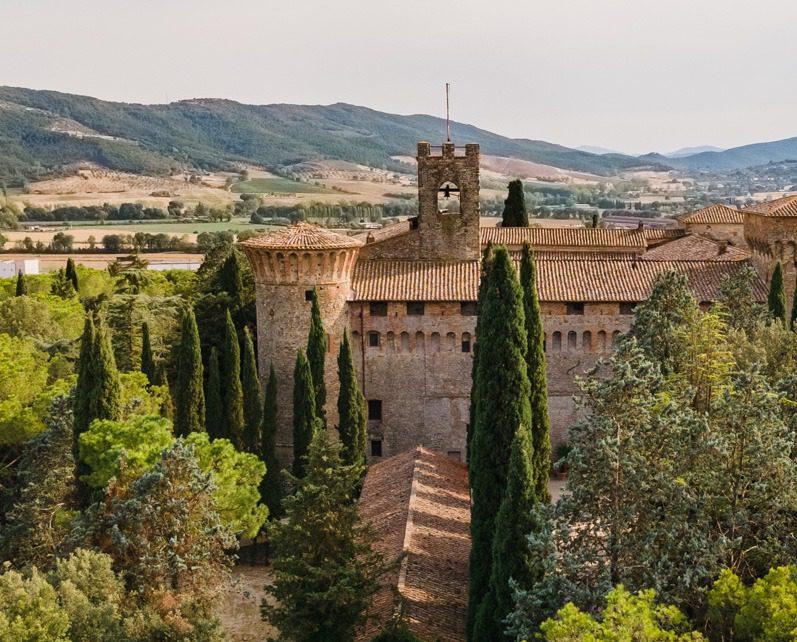
This is the philosophy of the Castello di Magione estate, in the province of Perugia, which gives its wines their signature character through a thorough knowledge of its vineyards, agronomic and winemaking practices tested on its grape varieties over the years, and technologies that combine tradition with a good measure of innovation and modernity
by Laura Turrini — published in VVQ – Vigne, Vini & Qualità, no. 3, April 2022
The Castello di Magione estate has a history spanning a thousand years. It lies within the Colli del Trasimeno DOC and is at the heart of a project rooted in its territory, on land that stretches from the slopes of Monte Tezio down to the shores of the lake and enjoys a particular microclimate, unique in Umbria, that gives its wines their distinctive character. The estate’s winemaking tradition dates back to the mid-18th century, and the centrepiece of the complex is the Castle of the Knights of Malta, built between 1150 and 1170 as an ancient hospitium (shelter) to welcome and protect the pilgrims travelling the Via Francigena on their way to Rome, Jerusalem and Santiago de Compostela. Since 2006 the property has been managed by Società agricola vitivinicola italiana S.Agri.V.It. srl, one of the largest agricultural groups in Italy, which coordinates 14 historic estates from the north to the south of the country.
“The Sagrivit companies work across many sectors,” explains Fabrizio Leoni, Director of Castello di Magione, “from cereal crops to orchards, from livestock to viticulture, for a total of almost 5,000 hectares of land. For this estate in particular, our main goal is to grow healthy grapes in the field, which are then processed, with the help of innovative technologies, in a winery set in the heart of the vineyards. Careful, environmentally respectful vineyard management, very short harvesting times and the use of refrigeration and temperature-control systems in the cellar are the key features of this wide-ranging project, which covers every stage of the supply chain.”
Bringing out the potential of native varieties
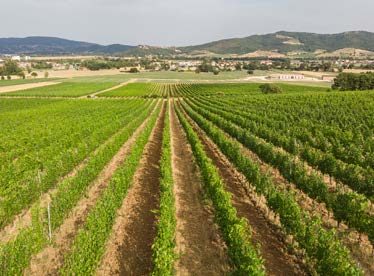
The hills and plains around the estate are made up of soils of different kinds that are particularly well suited to farming, an ideal starting point for producing high-quality wine and olive oil. Set in a kind of natural amphitheatre close to Lake Trasimeno, the vineyards lie entirely within the DOC, at an altitude of between 250 and 350 metres above sea level, and have been replanted at a density of 5,000 vines per hectare. 55% are planted with black grapes – such as Pinot Noir, Merlot, Gamay, Cabernet Sauvignon, Sangiovese and Canaiolo – and the remaining 45% with white grapes, mainly Grechetto, Chardonnay, Sauvignon Blanc and Trebbiano. The training systems used are the classic spur-pruned cordon, with a 70 cm trunk and three pairs of wires for vertical shoot positioning, and the arched Guyot; the trellising uses autoclave-treated pine for the end posts and galvanised steel for the intermediate posts, set 5.6 m apart.
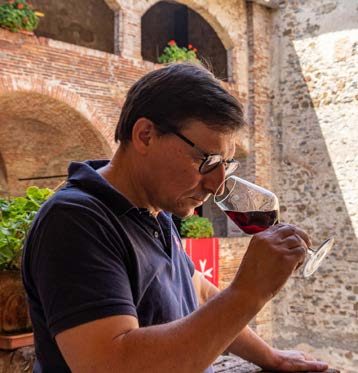
“Most of our wines are made from native grape blends, closely tied to the tradition of this land and to the Trasimeno area which, according to the humanist Giannantonio Campano, ‘produced such wine that few regions produced better’,” says Leoni. “One of our aims is to bring out the best of Grechetto, Umbria’s native white grape, as well as Sangiovese; we also grow international varieties that, in this microclimate, reach their full quality and aromatic potential.”
Stainless steel tanks, automatic pump-overs
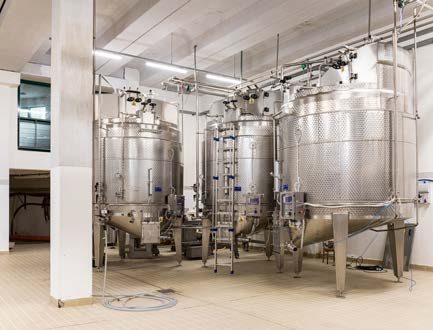
Castello di Magione currently produces around 200,000 bottles a year – red, rosé and white – with 70% going to the HoReCa channel and 30% to large-scale retail. Exports account for about 60%, reaching China, Russia, Germany, the Netherlands, the USA and Canada, and for the future the aim – besides doubling production within a few years – is to bring exports to 80% of total turnover. The new winemaking cellar, opened in 2009, covers an outdoor area of over 600 m² and an indoor area of around 2,800 m² on three levels linked by a goods lift: ground floor, basement and portico. The winery, equipped with modern technology for storing, processing and packaging wine, can vinify around 400 tonnes of grapes. Production takes place mainly on the ground floor – where the grapes are received, the wine is bottled and the temperature-controlled warehouse is located – and in the basement, where vinification takes place without any need for air conditioning: set 8 metres below ground level, the winemaking process enjoys a constant temperature.
The floors are made of industrial ceramic and the fermenters, in AISI 316 stainless steel, also help maintain a high standard of hygiene and cleanliness. Some of these tanks, in particular, can carry out cold carbonic maceration with whole grapes and automatic pump-overs driven by the pressure that builds up during fermentation. This allows the cellar team to work the musts in specific ways to make particular wines such as NeroCavalieri, a blend of Gamay, Pinot Noir, Cabernet Sauvignon and Merlot created in homage to the Knights of the Sovereign Military Order of Malta.
Eliminating the risk of oxidation
Leoni describes the production techniques in detail.
“The philosophy we have followed since the vineyards were planted in 1996 is that of ‘designing the vineyard around the winemaking goal’, always allowing each variety to express its full potential, which is directly linked to the territory.”
The best grapes – destined for the very finest wines – are hand-picked into crates and, once in the cellar, sorted on a vibrating sorting table and destemmed very gently. They then pass through a heat exchanger that lowers the temperature of the crushed grapes by 8–10 °C, avoiding contact with oxygen all the way to the press and eliminating the risk of oxidation. The press itself, a latest-generation model (maximum pressure 2.5 bar), is saturated with nitrogen, as is the temperature-controlled stainless steel tank, whose temperature is managed automatically by a software-controlled probe – for white wines it is held at 15.5 °C throughout fermentation. Once fermentation is complete, several rounds of bâtonnage are carried out on the fine lees.
“Knowing our vineyards, the agronomic and winemaking practices we follow and the technology we have chosen to use allow us to achieve consistent results across all our wines,” says the Director, who works in the cellar alongside consultant oenologist Maurilio Chioccia.
Fresh and fragrant, thanks to cryomaceration
For flagship wines such as Monterone and Artirè, for example, selected batches of grapes undergo cold cryomaceration for 48 hours, a technique that produces wines of great structure, complexity and aroma, some of which are also destined for several years of ageing and refinement in wood.
“For our mid-to-high range wines,” Leoni points out, “we have for some time been using a process in which dry ice is blown onto the grapes. This burns the skins and bursts the vacuoles, releasing terpenes (aromatic compounds) that give fresh, fragrant wines, very popular with younger drinkers.”
Careful agronomic management is also applied to certain plots that yield thick-skinned red grapes. After harvest these undergo a cold maceration in the cellar for 1–2 days at 5 °C, before fermenting at 25–26 °C for about 10 days. The result is wines of great structure – such as Morcinaia, the Director confirms – with a high net dry extract that allows long ageing in wood and then in bottle. This technology enables the winery to bring out the distinctive traits of each variety, vinified separately.
Arbuscular mycorrhizae, kaolin and basalt flour
In certain vintages the practice of cut Guyot has also been used on Merlot, an operation that must be carried out at a particular point in ripening in order to achieve ideal complexity and concentration in the grapes. In particularly dry seasons with very high temperatures over long periods, such as 2017 and 2021, Castello di Magione has also adopted agronomic techniques aimed at preserving the soil’s water reserves – repeated shallow tillage, organic matter enrichment and inoculation with arbuscular mycorrhizae – and at limiting water loss through transpiration, using natural anti-transpirants that partly close the leaf stomata. Using natural products such as kaolin and basalt rock dust, it has also protected the vine canopy from chronic photoinhibition (which causes chlorosis and necrosis of the leaves) and the berries from sunburn. These techniques were put into practice, with excellent results, in collaboration with Professor Alberto Palliotti of the Department of Agricultural, Food and Environmental Sciences at the University of Perugia.
“One of the most fascinating challenges of recent years,” Leoni observes, “has been adverse weather, directly linked to global climate change, which has forced us to respond to spring frosts and to multiple summer stresses – heat, radiation and water stress. So we started using kaolin, a white clay that, once sprayed on the canopy, acts as a ‘sunscreen’ and lowers leaf tissue temperature by 5–6 °C thanks to its high reflection of solar radiation, preserving the integrity of the leaves. Last season we also used basalt flour for the first time, with significant results. Finally, the use of arbuscular mycorrhizae on the young vines led to considerable root development, allowing them to overcome transplanting problems more quickly and, later on, to reach deeper into the soil.”
BOTTLING: THE ESSENTIAL STEP THAT COMPLETES THE CYCLE
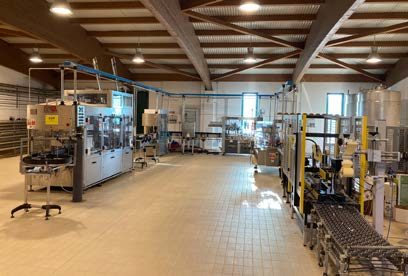
The ground floor of the Castello di Magione winemaking facility, covering around 1,030 m², is divided into two areas. The first is outdoors – under a canopy, on a 145 m² waterproof concrete surface – and is used for unloading the grapes, initial selection, quality control on the sorting table and feeding the crusher-destemmer. The second, of about 890 m², houses the processing and packaging line and the finished-goods warehouse, indoor areas separated by a partition wall. Designed to meet all current health and hygiene standards, this space has a roof with glued-laminated timber beams and a variable height – 4 metres on average – and is fully air-conditioned, for both heating and cooling, with humidity control. The winery equipment is designed to reduce the harmful effect of oxygen while the grapes are processed (tube-in-tube heat exchanger) and during bottling, which takes place over a total area of 600 m² with machines fitted with every measure needed to protect the wine during processing – such as pre-evacuation or vacuum filling. The preliminary stages of bottling are very important to the estate: the day before, the line is sterilised and, in particular, the filling bell and the various nozzles are sanitised with steam at 180 °C for about 3 hours. The whole line is divided into blocks linked by conveyor belts. The empty bottles are placed by hand on a rotating table and carried by a conveyor belt into the Fimer filling line. Once inside the first block, the bottles are blown, rinsed and turned upright again, to remove any residue left inside when the glass was formed. Before filling, nitrogen is injected into each bottle, which then passes to the 16-station filling bell. Once full, the bottle is carried by a series of feed screws to the corker, after nitrogen has been blown into the neck to remove all oxygen from the headspace. The wine only enters the filling bell after being filtered through Win&Tech filter housings.
“There are generally three filtration stations, each with 5 cartridge filters,” comments Fabrizio Leoni, Director of Castello di Magione. “The choice depends on the type of wine we want to filter: for whites, for example, we use ‘cascade’ filters of 3 microns, 1 micron and 0.45 microns (sterile). Before capsuling, or after a long period of ageing, the bottles are cleaned on the outside if necessary with a Gai bottle washer; this machine, fitted with brush rollers, removes surface dust using hot water, although this is done very rarely.”
A Robino & Galandrino capsuling machine automatically places the capsule on the bottle and then rolls it so that it fits perfectly around the neck. The capsules are loaded by hand by the line operator. The machine – fitted with automatic stop sensors along the conveyor belts and photocells that halt the process if capsules run out – also has heads for heat-shrink capsules, although the estate has opted almost exclusively for polylaminate capsules. The next stage is labelling, carried out by a Cavagnino & Gatti rotary plate labeller. The first label applied is the back label, which carries all the legally required information (producer name, wine denomination, product name, alcohol content, bottling plant, EAN code, etc.); the bottling lot number is hot-stamped just before the back label is applied. The rotary plate labeller has 5 stations that rotate to position the two labels with millimetre precision. A very important job is done by the so-called “rubber spatulas”, which make sure the label adheres precisely to the bottle, without gaps or air bubbles, before a soft rubber slide presses the label firmly onto the bottle as it leaves the machine. The bottles then travel along a table on a conveyor belt, ready to be boxed. The carton is formed and taped automatically at the bottom by a Siat taping machine and a Siat carton erector, and reaches the operator open, so that the bottles can be placed inside and the package sent on to another belt to be closed automatically at the top. Before the carton leaves the machine and is palletised, a robotic arm (print and apply) prints and attaches a label with its main details. At the same time, an empty 80×120 cm pallet is placed on a turntable: an operator stacks 25 cartons per layer, four layers in all, for a total of 100 cartons and 600 bottles; finally, the pallet is automatically wrapped in stretch film.
“We produce around 2,000 bottles an hour with this line,” Leoni explains, “mostly using the classic European Bordeaux bottle in its various sizes, as well as the Burgundy bottle. Changing bottle type also means changing both the ‘star wheels’ and some of the feed screws on the line, because the Burgundy bottle has a larger diameter than the Bordeaux. In our view, bottling is a very important operation that completes the production cycle. During this stage several bottles are taken – at the start, middle and end of the run – and later sent to the laboratory, where specific analyses are carried out to check for any unwanted yeasts, moulds or bacteria. We are currently considering buying a robotic arm to place the bottles in the cartons at the end of the cycle, as this is very repetitive work for our operators. We are one big family,” the Director says, “and we care about our employees as much as the core principles that guide us, such as sharing, the exchange of ideas, mutual collaboration and respect. With the help of our technological and professional strengths, we will continue to bring out the distinctive traits and intrinsic quality of our grapes.”
Respect for nature and hospitality
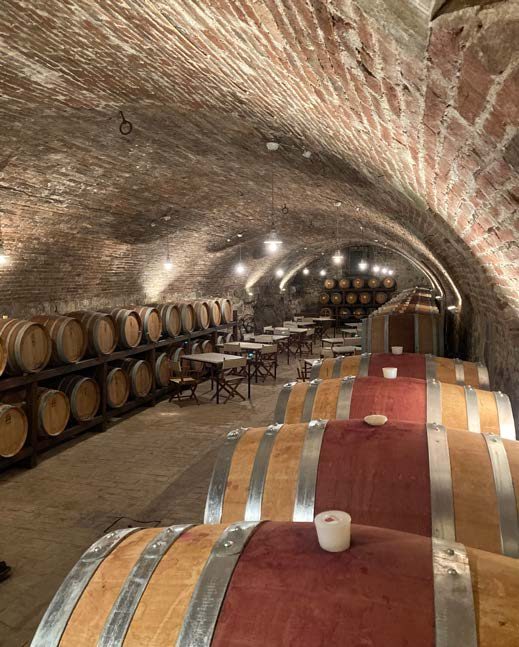
A green, environmentally sustainable approach is now one of the core values of Castello di Magione. Behind every wine, in fact, there is an integrated project that covers every stage of the supply chain and requires close coordination between the agronomic, winemaking and sales teams, as the Director explains.
“Today a great deal can be managed mechanically, but nothing can ever replace the intuition, sensitivity, passion and curiosity of the people who live in the vineyard every day. Respect for nature, environmental sustainability and hospitality are the priorities we strive for every day.”
For six years the winery has taken part in the regional biodiversity scheme, which requires keeping all the prescribed plant species between the rows, to encourage biological diversity and provide a genuine “lung” for bees and other beneficial insects and fungi.
“With funding from the regional CMO programme, last year we replaced all the lighting inside the winery with low-energy LEDs, and this year too part of our investment will go towards low-energy outdoor lighting,” says Leoni. “In 2020, in our own small way, we also did our bit for the environment: thanks to the cork stopper producer Amorim, which follows specific ethical and sustainability standards, we released less CO2 into the atmosphere than in previous years and, as proof of this commitment, we received a green certificate from this supplier. Our goals still include installing heat pumps to produce hot water – to considerably reduce energy consumption – as well as a photovoltaic system on the roof to make us even more self-sufficient, and a treatment unit, with an attached biobed, for the water used to wash crop-protection equipment, so as to reduce point-source contamination. We believe,” the Director concludes, “that an environmentally sustainable approach strongly influences consumer choices today, and this trend will probably grow even further in the future. We aim to become a company ever more open to new technologies, while respecting the environment, in a setting where tradition and innovation can coexist and where people remain at the centre of every choice.”
Article by Laura Turrini published in VVQ – Vigne, Vini & Qualità, issue 3, April 2022 (in Italian). You can read the original article in PDF.